
Consumer Discretionary
M&A, financings and valuations for consumer products companies in home décor, sports and leisure, toys, gifts and collectibles, fitness and recovery, and arts and crafts.
Discretionary consumer products live or die on brand, product cycle and channel. Tully & Holland has advised owners of home décor, outdoor and sporting goods, toy and gift, and hobby businesses through sales to strategic acquirers and private equity, and we have seen which of those businesses buyers value as brands and which as sourcing and distribution platforms.
Our bankers spent their operating careers in consumer companies, so we understand seasonality, retailer concentration, inventory risk and the sourcing questions that come up in diligence. We prepare owners for those questions before a buyer asks them.
We advise on sales and divestitures, acquisitions, financings and valuations. Every engagement is led by the senior bankers you meet first.
Consumer Discretionary transactions

has been acquired by

 Sell-side transaction

has been acquired by
 Sell-side transaction

has been acquired by
 Sell-side transaction

has been acquired by
COM Holdings LLC, a portfolio company of Gemini Investors
Sell-side transaction
has been acquired by
 Sell-side transaction

has divested its MovieStop division to
 Sell-side transaction

has been acquired by the former CEO of
 Sell-side transaction

has been sold to
 Sell-side transaction

has acquired
Rubber Products, Inc.
Sell-side transaction
has sold Craft House to
 Sell-side transaction

sold its Electronic Products Division to
 Sell-side transaction

has been acquired by
 Sell-side transaction

has been acquired by a private investor
Sell-side transaction
has been acquired by
 Sell-side transaction

has merged with
 Financial advisor
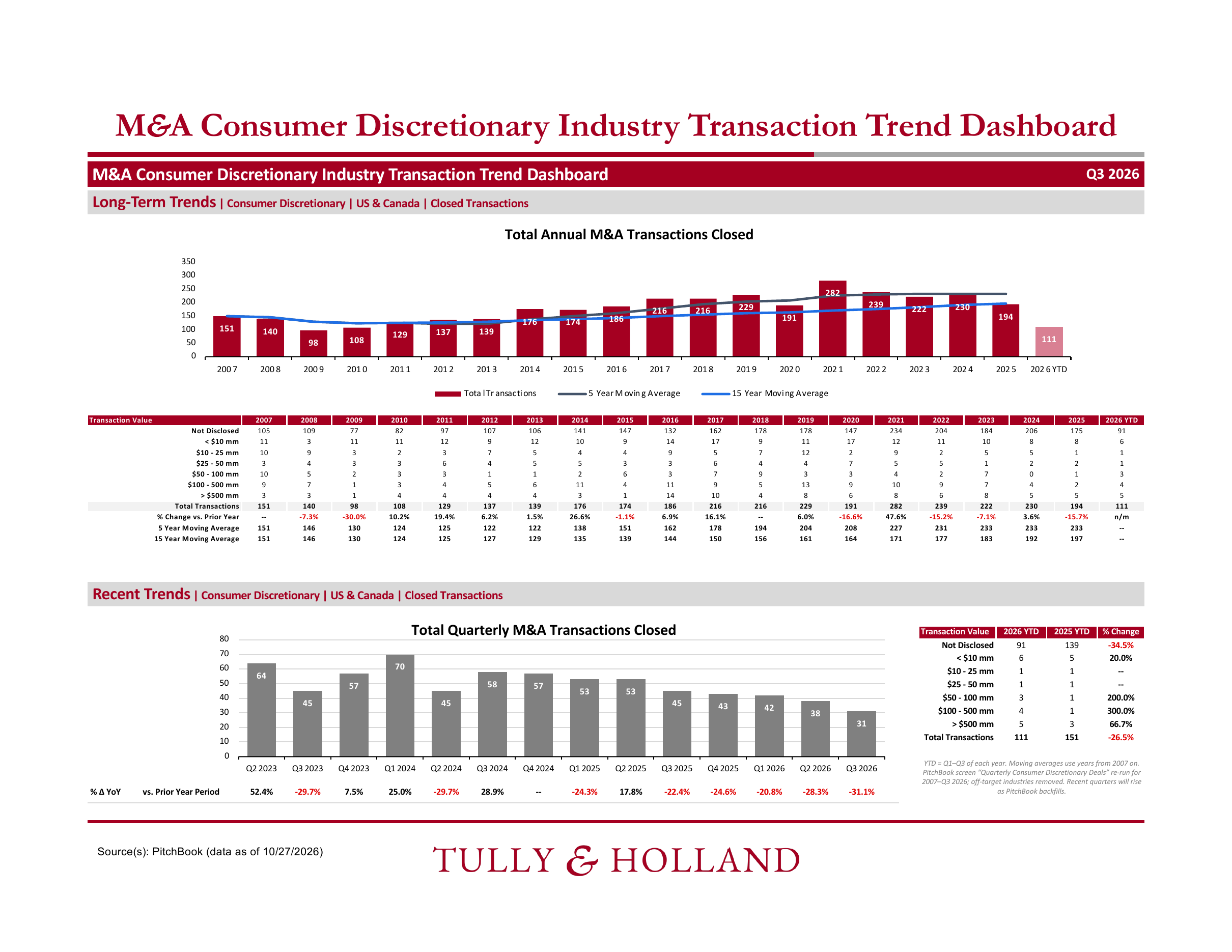
Consumer Discretionary transaction trends
Closed Consumer Discretionary transactions by year, by quarter and by deal size, drawn from Capital IQ and PitchBook and updated quarterly. Every sector’s dashboard is on the Industries page.
Consumer Discretionary transaction trends
Consumer Discretionary insights

Consumer Industry Update Q3 2025
Global deal value jumped 35.1% year over year to $1.1 trillion, the strongest quarter since late 2021, while consumer de...
Read →
Consumer Industry Update Q3 2024
Consumer M&A closed 219 transactions in Q3 2024, up 52% from a year earlier, as a first Fed rate cut and post-election o...
Read →
Consumer Industry Update Q2 2024
Consumer M&A closings returned to 192 in the second quarter of 2024, up 14% from Q1, with food and beverage transactions...
Read →
Consumer Industry Update Q1 2024
Global M&A rose 31% from a year earlier, North America led the recovery, and consumer deal counts held steady while the ...
Read →
Consumer Industry Update Q4 2023
Global M&A rose 13% year-over-year in Q4 2023, consumer deal counts jumped 19% from the prior quarter, and quality consu...
Read →
Consumer Industry Update Q2 2023
Global deal value fell hard in Q2 2023, yet the number of deals getting done rose almost everywhere, and consumer volume...
Read →Questions owners ask
How do buyers treat seasonality in a consumer products business?
They normalise for it. A business that earns most of its profit in one quarter is valued on a full-year, trailing twelve month basis, and buyers will want to see several years of the pattern. We present seasonality as a known feature of the category rather than a surprise in diligence.
Is a consumer products company with retailer concentration still sellable?
Yes, with the right preparation. Buyers discount concentration, but they pay for a long trading history, growing sales inside the account and a credible plan for the next channels. We address concentration directly in the materials rather than hope it goes unnoticed.
Who buys consumer discretionary companies?
Category strategics consolidating brands, private equity groups building multi-brand platforms, and occasionally larger direct-to-consumer or retail companies adding product capability. We know who is active in each category and what they have paid.