
Kombucha Industry Update Winter 2024
Kombucha Grows Up
A fermented tea that started on health-food shelves reached $2.8 billion in U.S. revenue in 2024, growing 19.7% a year since 2019. Our Winter 2024 update on what built the category, and where the deal activity was heading.

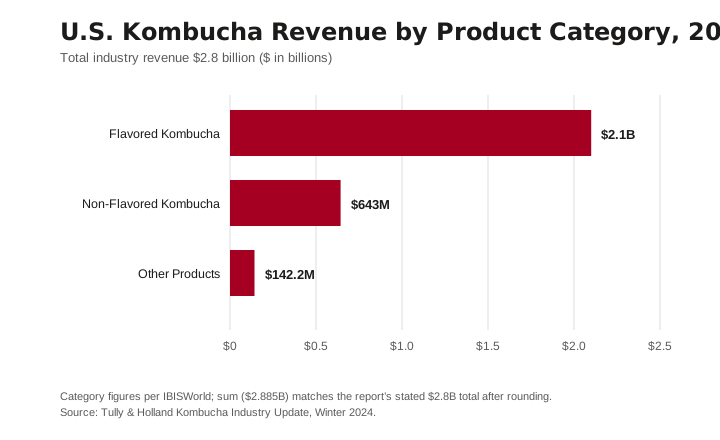
U.S. kombucha revenue in 2024, the product of a 19.7% compound annual growth rate since 2019.
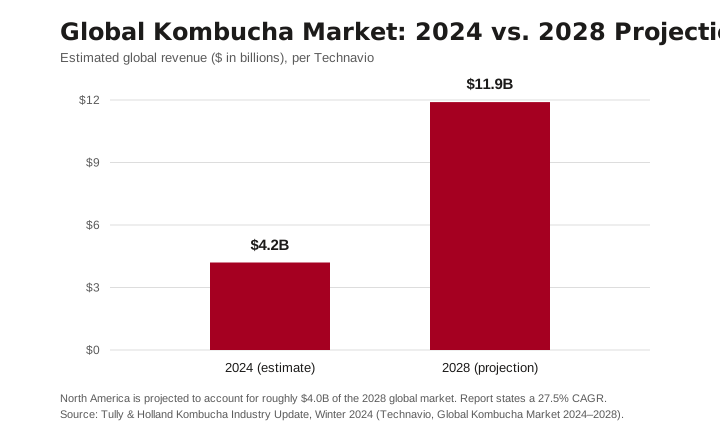
the projected global market, up from an estimated $4.2B in 2024, with North America expected to account for roughly $4.0B.
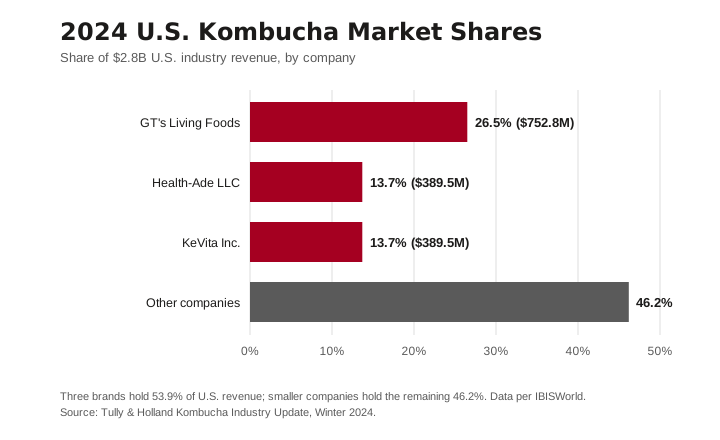
GT's Living Foods' share of the U.S. market ($752.8M), with Health-Ade and KeVita each holding 13.7%.
the share of U.S. revenue held by smaller companies. Behind three big brands sits a wide, fragmented field.
our count of the transactions in the report's appendix, with Coca-Cola, Molson Coors, and Keurig Dr Pepper among the buyers.
the industry's average profit margin. Growth is abundant; profitability demands discipline.
Executive Summary
Kombucha, a fermented tea recognized for its probiotic content and potential health benefits, has evolved from a niche wellness product to a global beverage industry staple. Between 2019 and 2024, the industry achieved an impressive compound annual growth rate (CAGR) of 19.7%, in the United States, reaching $2.8 billion in annual revenue. Globally, the kombucha market was estimated to be valued at $4.2 billion in 2024 and is projected to maintain strong growth, reaching $11.9 billion by 2028, with CAGR of 27.5%.2 Kombucha’s journey reflects broader food and beverage trends, including increasing consumer demand for functional, natural, and sustainable products. Its versatility, encompassing flavored, non-flavored, and alcoholic varieties, positions it as a leader in meeting the evolving tastes and health priorities of modern consumers.
This write up explores the dynamic landscape of the kombucha industry, detailing its growth drivers, challenges, opportunities, and alignment with broader trends in health-conscious consumption.
Industry Overview
In 2024, the domestic kombucha industry recorded $2.8 billion in revenue, distributed among three primary product categories:
- Flavored Kombucha: $2.1 billion
- Non-Flavored Kombucha: $643 million
- Other Products: $142.2 million
The market's profitability, with an average profit margin of 4.5%, is bolstered by its ability to cater to a wide audience. As pictured below, key players dominate market share, led by GT’s Living Foods with $752.8 million (26.5%), followed by Health-Ade LLC and KeVita Inc., each generating $389.5 million (13.7%). Smaller companies account for 46.2% of the market, underscoring the industry’s competitive nature.
Drivers and Themes
As consumer preferences continue to shift towards healthier lifestyles and sustainability, the kombucha industry has seen significant growth. This surge in popularity is driven by several key trends that reflect a broader cultural movement toward wellness, innovation, and environmental responsibility. From health-conscious choices to creative flavors and eco-friendly practices, kombucha is evolving to meet the demands of today’s discerning consumers.
Listed below are some of the top industry trends shaping the future of kombucha:
Health and Wellness Prioritization
The global wellness movement has elevated kombucha as a preferred alternative to sugary sodas and energy drinks. Its natural fermentation process produces probiotics, which are believed to improve gut health and strengthen immunity. The gut-brain connection further enhances kombucha's appeal, as many believe that a healthy gut can support overall well-being, including mood and mental clarity. Kombucha also resonates with the growing "clean label" movement, as consumers increasingly demand transparency, natural ingredients, and reduced sugar content.
Flavor and Product Innovation
Brands have embraced creativity to appeal to diverse consumer preferences. Flavors such as hibiscus rose, lavender melon, and turmeric ginger attract adventurous consumers and reinforce brand loyalty. Additionally, the emergence of alcoholic kombucha, marketed as a healthier alternative to beer or wine, highlights the potential for crossover appeal between wellness and indulgence.
Sustainability and Eco-Conscious Practices
The kombucha industry’s commitment to sustainability enhances its appeal. From organic sourcing to eco-friendly packaging and carbon footprint reduction, producers are aligning their practices with consumer expectations for responsible consumption. These efforts not only build trust but also establish kombucha as a leader in the environmentally-conscious beverage segment.
Kombucha Hits the Mass Market
Kombucha has transitioned from a niche product to a common item in grocery stores around the world, recognized for its wide range of flavors and potential health benefits. Major beverage companies are increasingly investing in existing kombucha brands or launching their own, which strengthens its market credibility and reflects a broader shift towards healthier drink options. This widespread acceptance has driven substantial growth, resulting in a highly competitive market where brands are pressured to innovate, stand out, and adopt strong marketing tactics to maintain an edge.
Broader Forces Influencing Kombucha
Kombucha’s growth is closely tied to overarching trends in the food and beverage industry:
Functional Beverage Evolution
Functional beverages, designed to enhance digestion, mental acuity, and emotional balance, are gaining traction among health-conscious consumers. Kombucha exemplifies this trend, as its probiotic content and natural fermentation process offer tangible wellness benefits. The broader demand for nutrient-dense, additive-free products positions kombucha as a frontrunner in this category.
Consumer Preference for Plant-Based Alternatives
The rise of plant-based diets has paralleled the growth of kombucha. While kombucha is inherently plant-based, it shares market space with products like alt-milks (quinoa, pistachio, hazelnut) that cater to eco-conscious and dairy-free consumers. This alignment underscores kombucha’s versatility as part of a sustainable and ethical lifestyle.
Challenges in the Kombucha Industry
Despite its successes, the kombucha industry faces several challenges:
- Intensifying Competition: As large players consolidate their dominance, smaller producers struggle to differentiate themselves and secure market share.
- Emerging Beverage Alternatives: The rise of functional sodas like Olipop and CulturePop presents new competition, offering similar health benefits and appealing to consumers seeking low-sugar, gut-friendly alternatives to traditional sugary drinks.
- Regulatory Compliance: Managing alcohol content and adhering to labeling standards require significant operational oversight, particularly for producers scaling operations.
- Consumer Education: While kombucha is gaining popularity, some consumers remain unfamiliar with its benefits, creating a need for targeted marketing and educational efforts.
Opportunities for Growth
By 2028, the global kombucha industry is projected to reach $11.9 billion in revenue with a CAGR of 27.5%, with North America estimated to account for $4.0 billion of the market share, growing at 27.2%.2 This growth is driven by sustained consumer demand for health-conscious and sustainable products. In addition to these key driving factors, there remains significant opportunities for growth in the Kombucha market.
Expansion into Alcoholic Kombucha
The rise of hard kombucha presents a significant growth opportunity. Positioned as a healthier alternative to traditional alcoholic beverages, this segment appeals to consumers seeking indulgence without compromising their health goals. Leading brands in the space include JuneShire, Flying Embers, and Boochcraft, which have established themselves as top players in the hard kombucha market.
Global Market Expansion
Kombucha’s rising international popularity opens doors for export growth. Producers can leverage unique flavor profiles and health benefits to establish footholds in untapped markets.
Innovation in Ingredients and Personalization
Advances in ingredient research and production methods offer opportunities for creating tailored kombucha products. From functional additives to customized flavor profiles, personalization can deepen consumer engagement and loyalty.
Conclusion
Kombucha's ascent reflects wider changes in the food and beverage industry, where health, transparency, and sustainability are increasingly at the forefront. By balancing innovation with operational excellence, the kombucha industry is well-positioned to navigate challenges, capitalize on growth opportunities, and sustain its momentum in a competitive marketplace. As kombucha continues to cater to diverse consumer preferences, it has the potential to redefine wellness-focused beverages and set new benchmarks for industry success.
Deals in the kombucha market have been largely constrained by the limited number of industry players, as well as the relatively new and emerging nature of the space. As the popularity, and broad market appeal, of probiotic drinks continues to rise, we expect to see deal volume increase commensurately. For over 30 years, Tully & Holland has been dedicated to advising, serving, and advocating for owners, entrepreneurs, strategic acquirers, and private equity firms across the consumer spectrum. We look forward to working with you.
Text reproduced from the report as published by Tully & Holland. Photograph: Shisma, CC0, via Wikimedia Commons.
Keep reading

Vitamins & Supplements Update Fall 2022
Nearly 1,800 U.S. supplement manufacturers compete in a market where the top four players hold less than 15% of revenue....
Read →
Frozen Food Industry Update Summer 2025
A $91.3 billion category has shed its last-resort reputation, and buyers have noticed. Our Summer 2025 update on the tre...
Read →
Brewer Industry Update September 2019
By September 2019, more than 7,000 craft brewers were competing for a beer market that had stopped growing. Our update f...
Read →